
Blood pressure monitors: Dubai’s accuracy reality check
TL;DR: For blood pressure monitors, accuracy starts with evidence of validation, an appropriate cuff and correct use, not an impressive feature list, as the World Health Organization's device guidance explains.
Key takeaways
- Validation means a device has undergone standardised accuracy testing against a reference method, according to WHO's technical specifications.
- The intended arm-circumference range matters: WHO says manufacturers should specify it for the device or cuff.
- Even a validated monitor can lose accuracy over time, particularly through cuff and tubing wear, notes WHO's maintenance guidance.
- Home readings do not replace professional assessment: WHO's hypertension guidance says evaluation by a health professional remains important.
Buying a blood pressure monitor in Dubai or elsewhere in the Gulf? Treat the purchase as two decisions: whether the measurement has credible evidence behind it, and whether the device can be supported where you will use it. An app connection can wait its turn. Bluetooth has many talents, but peer review is not one of them.
What does a validated blood pressure monitor mean?
A validated blood pressure monitor has undergone standardised testing of its measurement accuracy against a reference method. In its technical specifications, WHO describes validation as rigorous testing against a gold standard and says accuracy-validation testing should be conducted independently using standard protocols.
For a buyer, the useful question is specific: what evidence supports this exact model? Ask for the model identifier and its validation evidence together, rather than accepting a general claim about the manufacturer's reputation. This is a practical evidence check, not a ranking of brands.
WHO's accuracy section names resources including STRIDE BP for information on validated devices. A named resource is a starting point for checking a model, not a claim that every product from a listed manufacturer is suitable for every person.
Why does the cuff matter as much as the screen?
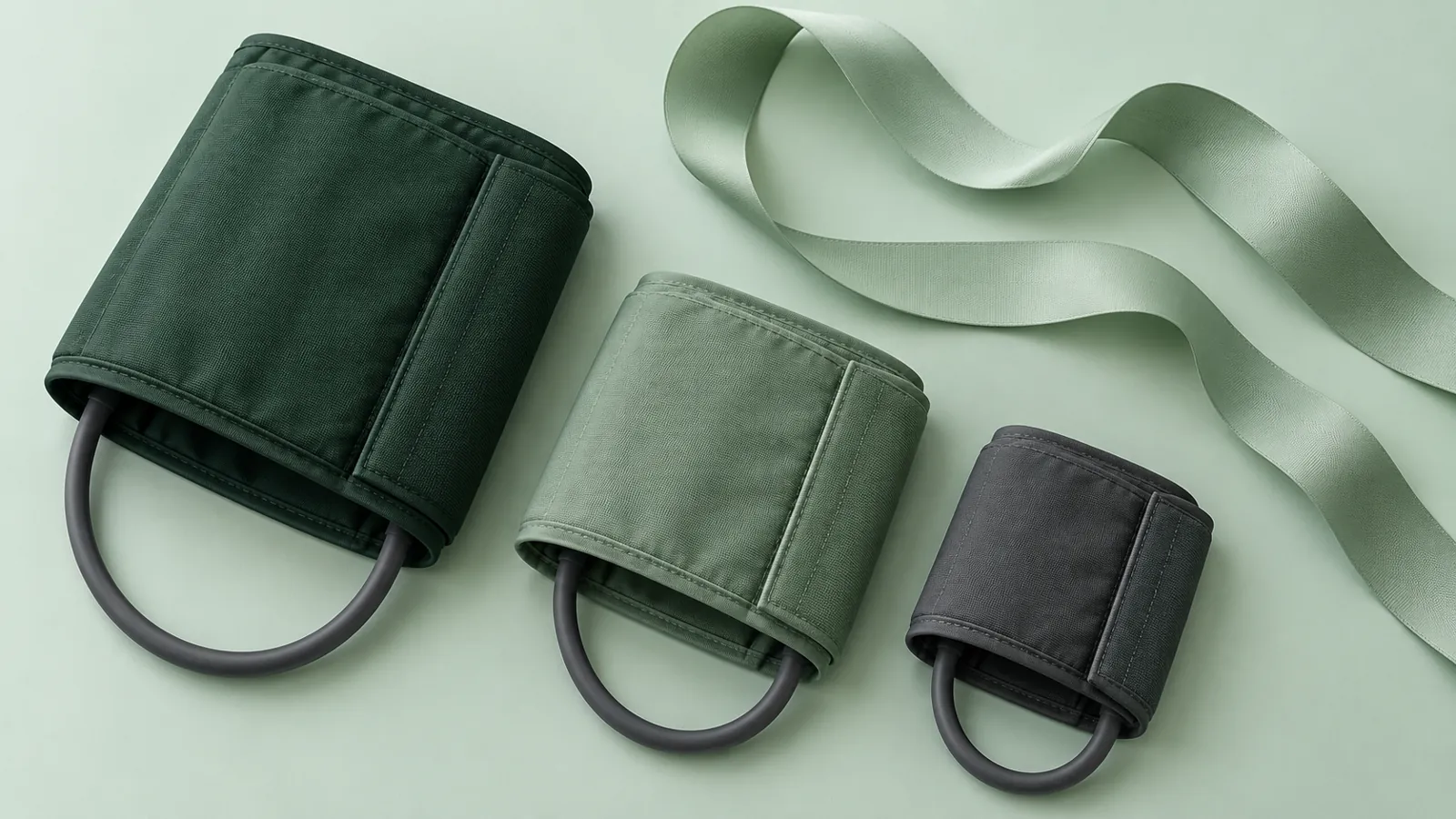
The cuff's intended arm-circumference range is part of the device's measurement setup, not a decorative accessory. WHO's specifications say manufacturers should state that range and clearly mark cuffs for the arms they are intended to fit.
Before buying, ask the supplier which cuff is included, what range it covers and which replacements are compatible with the exact model. If a device will be shared, ask a qualified professional about suitability for each intended user rather than assuming one cuff settles the matter for the household.
Validation also has limits across user groups. WHO identifies additional specifications for special populations, including children and pregnant women. General adult evidence should not be treated as a universal permission slip.
What should Dubai and GCC buyers ask the supplier?
Ask about the exact model, included cuff, written instructions, warranty and access to compatible replacements or servicing. This is a practical buying checklist, not a statement of UAE or GCC legal requirements.
WHO's procurement guidance considers distributor support, manuals and warranty information alongside technical specifications. That guidance is written for procurement rather than personal shopping, but its useful principle travels well: the purchase is more than the box on the day it arrives.
For someone buying in one Gulf country and using the monitor in another, ask who would handle a service request and whether the stated warranty covers that arrangement. Do not assume the answer from the seller's location. A discount is easier to enjoy when the after-sales plan is not a geographical mystery.
Does a validated monitor guarantee a correct reading?
No, validation does not make every individual reading correct. WHO explains that device accuracy is only one factor in accurate blood pressure measurement, alongside measurement training and the person's condition.
Use the manufacturer's instructions and ask a qualified healthcare professional to explain an appropriate home-monitoring process. This article does not set a measurement schedule, interpret readings or recommend changes to medicines.
For a related distinction about consumer health technology, our fitness tracker accuracy guide examines calorie estimates. It is a separate topic, not evidence that fitness trackers and blood pressure monitors are interchangeable.
Can a monitor become less accurate over time?
Yes, even a validated automated monitor can lose accuracy with use. WHO highlights cuff and tubing wear and says checks should follow the manufacturer's user and maintenance instructions, with technical accuracy assessment handled by appropriate professionals or service centres.

That makes replacement parts and servicing worth discussing before purchase. Do not translate an institutional maintenance interval into a universal home rule, or attempt to recalibrate a monitor from an online tip.
Can home readings replace a clinical assessment?
No, home blood pressure measurements do not replace a health professional's assessment. WHO states that professional evaluation remains important for assessing risk and associated conditions, even though people can measure their blood pressure using automated devices.
A purchasing checklist cannot determine whether a reading is safe for you. Discuss concerning readings with a qualified healthcare professional rather than using this article to reach a diagnosis.
Limitations
This article does not test, certify or rank any blood pressure monitor. It does not establish current UAE market authorisation, verify individual model-validation studies or assess suitability for a particular person. WHO's device document was published in 2020 and is technical procurement guidance, not a personalised home-monitoring plan.
No blood pressure monitor, wellness questionnaire or separate wellness service is presented here as a substitute for clinical assessment. The article provides general information, not diagnosis, treatment or personalised medical advice.
Where does mescreen™ fit?
mescreen™ offers a separate wellness profiling service, not the blood pressure monitoring discussed here. The current mescreen™ UAE product page describes an at-home mitochondrial function assessment using a dried blood spot sample, with analysis at a partner laboratory in the United States, and explicitly states that it is not intended to diagnose, treat or cure a medical condition.

If you are separately considering wellness profiling, review that page for the service's stated scope and limitations. It is not a recommendation to buy a test because of a blood pressure reading.
Sources
- WHO technical specifications for automated non-invasive blood pressure measuring devices with cuff, publication overview, World Health Organization, 2020
- WHO technical specifications for automated non-invasive blood pressure measuring devices with cuff, full technical document, World Health Organization, 2020
- Hypertension, World Health Organization
- Mescreen Mitochondrial Function Assessment, mescreen™ UAE