
Dubai UV index: Beyond the heat
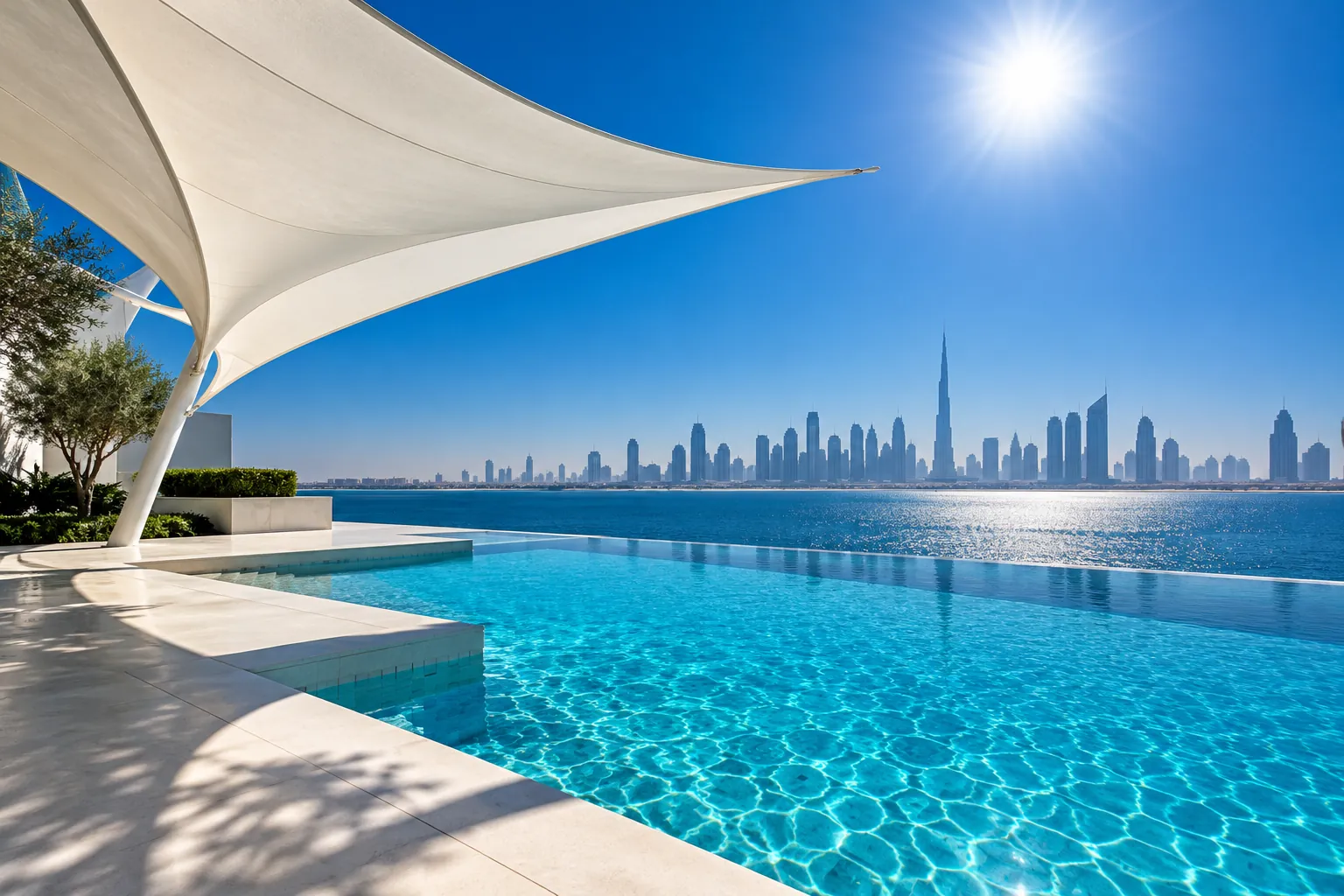
TL;DR: Dubai's UV index describes ultraviolet exposure, not how hot the day feels; the World Health Organization recommends sun protection when the index reaches 3 or above.
Key takeaways
- The World Health Organization's UV index explanation-index) describes a scale starting at zero, with higher values indicating greater potential for skin and eye damage.
- WHO recommends sun protection at a UV index of 3 or above, and notes that UV can remain high under cloud cover.
- A daily maximum and an hourly reading describe different time windows. WHO explains that UV varies throughout the day-index), with the daily maximum occurring around solar noon.
- Shade is useful but incomplete protection: WHO highlights scattered and reflected UV, including around sandy beaches, water and white buildings.
What does the UV index in Dubai mean?
The UV index in Dubai means the same thing as elsewhere: an indicator of ultraviolet radiation levels and their potential to harm skin and eyes. The WHO definition of the UV index-index) describes values from zero upwards, with greater potential for damage as the number rises.
It is not a temperature reading. WHO explains that ultraviolet radiation cannot be seen or felt, and that its level depends on factors including sun elevation, cloud cover, altitude and reflection.
For a Dubai beach visit, outdoor lunch or waterfront walk, our practical reading rule is to keep two questions separate: what does the weather feel like, and what does the UV forecast say? The thermometer has a job. Running the entire outdoor-safety department is not it.

This article explains the index rather than supplying today's value. A number copied into an evergreen article soon becomes yesterday's weather wearing a fresh shirt.
Where can you check Dubai's UV index?
A weather service or app that explicitly reports UV for Dubai is a useful starting point, provided you check its location and time window. WHO's sun-protection guidance identifies weather services, weather apps and the SunSmart Global UV App as places to find local UV information and sun-protection times.
Our editorial checklist for reading a forecast is straightforward:
- Confirm that the selected location matches your destination.
- Check the date and local time attached to the display.
- Establish whether the figure is current, hourly or the day's maximum.
- Read the accompanying protection guidance rather than stopping at the colour.
For GCC travel, use the destination's forecast rather than carrying a Dubai reading to another city. This is a source-checking rule, not a claim that one Gulf city always has a higher UV index than another.
Why can hourly and daily UV readings differ?
Hourly and daily readings can differ because UV levels change through the day, while a daily headline may describe the maximum. WHO's reporting explanation-index) places the daily maximum within the four-hour period around solar noon.
The useful distinction is between “what applies at this time?” and “what is the highest level expected today?” Before comparing two apps, check that both are answering the same question.
For a Gulf itinerary involving a morning walk and a later beach visit, our recommendation is to read the relevant time windows separately. Do not assume that a reading checked once describes every hour of the outing.
!Palm leaves beneath a softly clouded lavender sky

Do clouds or cooler weather mean low UV?
Cloud cover and a comfortable temperature do not establish that UV is low. WHO's ultraviolet radiation fact sheet states that UV can be high even with cloud cover and cannot be felt.
For UAE readers making plans when the weather feels more inviting, the important distinction is comfort versus exposure. Our judgement is to use the UV reading itself, not the pleasantness of the breeze, as the starting point for UV decisions.
Nor should a UV reading stand in for an air-quality assessment. If that is the separate question you are investigating, our guide to reading Dubai air quality information explains how to approach those displays. One dashboard tile is not a universal permission slip.
What does WHO recommend at UV index 3?
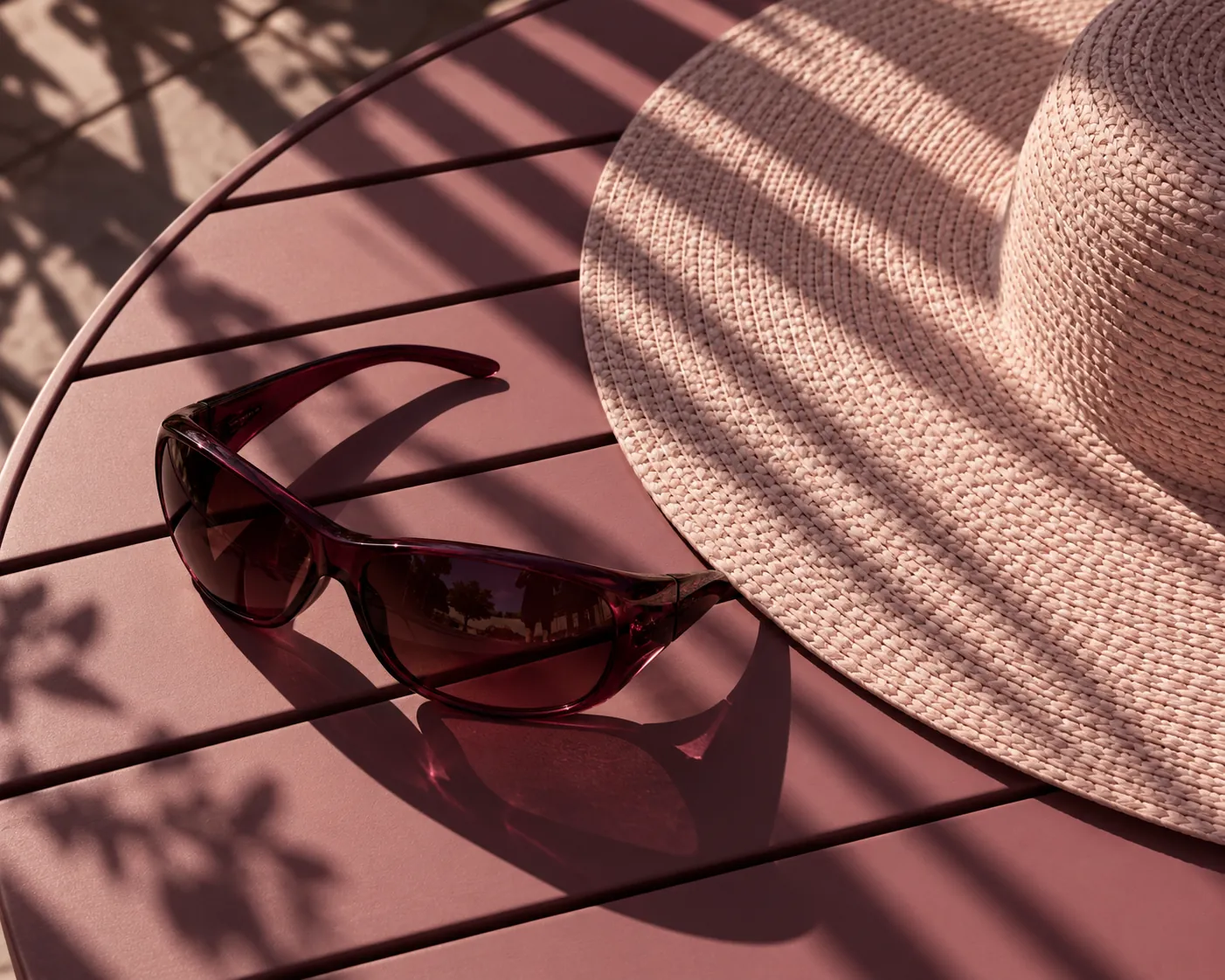
WHO recommends sun protection when the UV index is 3 or above. Its UV index guidance-index) combines shade, clothing, a hat, sunglasses and sunscreen rather than treating any single item as the whole answer.
The WHO sun-protection guidance prioritises shade and clothing, recommends broad-spectrum sunscreen for skin that cannot be covered, and warns against using sunscreen to extend time in the sun. These are general public-health measures, not an individual exposure allowance.
!Wide-brimmed woven hat and burgundy sunglasses on a rose-coloured table

Are beach umbrellas enough on their own?
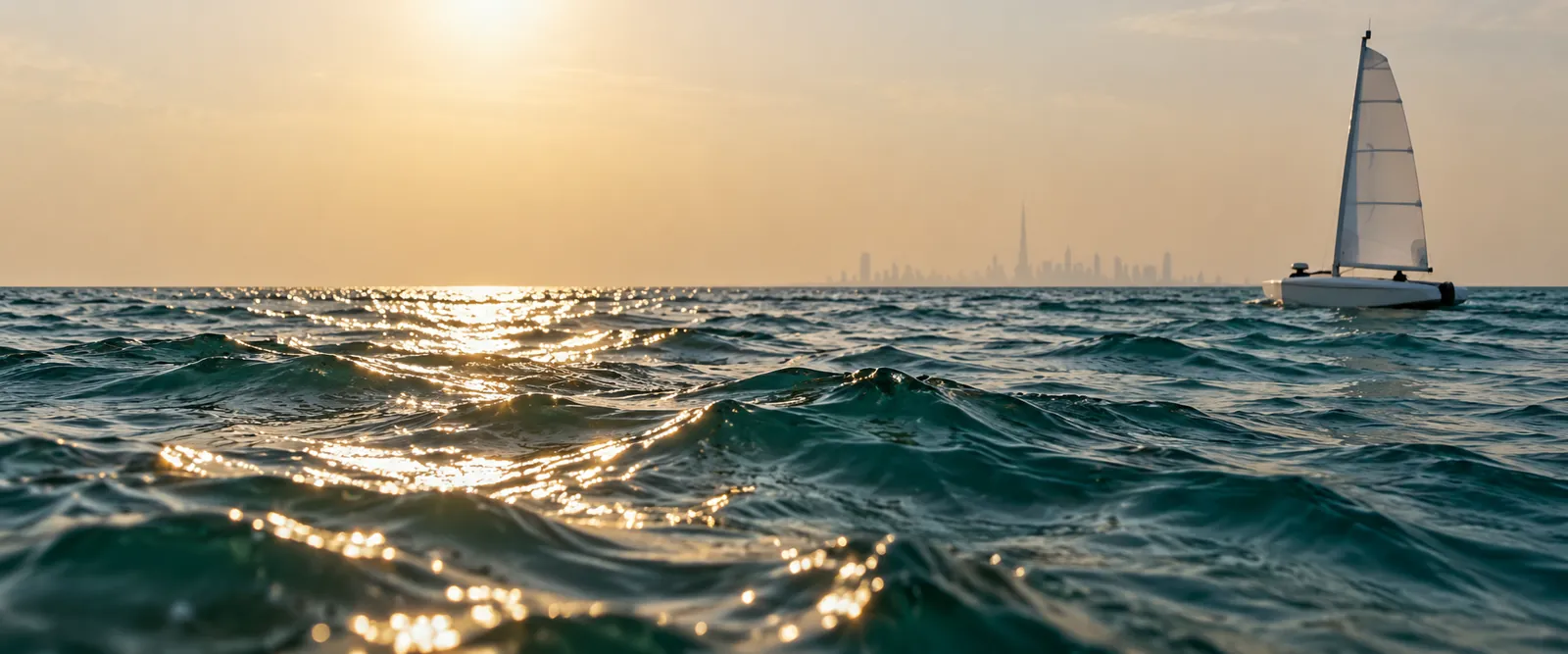
Beach umbrellas do not provide complete UV protection. WHO explains that trees, umbrellas and canopies leave exposure to scattered and reflected radiation, particularly around water, sandy beaches and white buildings.
That is a directly relevant distinction for a Gulf beach or pool outing: being out of the direct sun is not the same as eliminating UV exposure. The implication is to read shade as one part of WHO's combined approach, not as a replacement for it.
!Sunlight reflecting from Gulf waters beside a distant sailboat

Where does mescreen™ fit into this question?
mescreen™ belongs in a separate wellness-purchasing decision, not in interpreting a UV forecast. The current mescreen™ UAE product description describes an at-home mitochondrial function assessment using a dried blood spot sample and laboratory analysis, with a report for wellbeing and performance tracking that is not diagnostic.
That description does not establish a role in measuring personal UV exposure or determining how long someone can remain in the sun. We make no such claim here.
If you are independently considering the assessment for its stated wellness purpose, read the current UAE product scope and limitations before deciding. A UV forecast is not a reason to buy a mitochondrial assessment.
!Empty mint-coloured colonnade with geometric shade patterns

Limitations
This is general information, not a live Dubai UV bulletin, personal exposure calculation or medical recommendation. It does not provide a guaranteed safe number of minutes outdoors, interpret symptoms or recommend a personalised sunscreen regimen.

The WHO sources explain general UV principles and public-health guidance. They do not establish a neighbourhood-level reading for Dubai or a comparative ranking of GCC cities. No current UV value, local disease rate or mescreen™ health outcome is claimed.
For the next outing, the proportionate next step is to consult the relevant local UV forecast and its accompanying protection guidance. Keep that decision separate from any wellness test purchase.