
Prolonged sitting: The UAE desk trap
TL;DR: Prolonged sitting and insufficient exercise are different issues, and Dubai Health Authority guidance addresses both rather than treating a workout as the whole story.
Key takeaways
- Sedentary behaviour means waking time spent sitting, reclining or lying with very low energy expenditure, not simply missing the gym, according to Dubai Health Authority's definitions.
- Dubai Health Authority recommends limiting sedentary time and replacing it with physical activity, including light activity, in its adult activity guidance.
- A cross-sectional study of 140 UAE university students found substantial sedentary time, but it does not establish how much every UAE office worker sits.
- mescreen™'s current UAE product page describes a non-diagnostic wellness assessment, not a test of whether a desk routine is safe.
What counts as prolonged sitting?
Prolonged sitting describes extended seated periods; the more precisely defined research term is sedentary behaviour. In its 2026 Physical Activity Guideline, Dubai Health Authority defines sedentary behaviour as waking activity with very low energy expenditure while sitting, reclining or lying. Examples include desk work, driving and watching television.
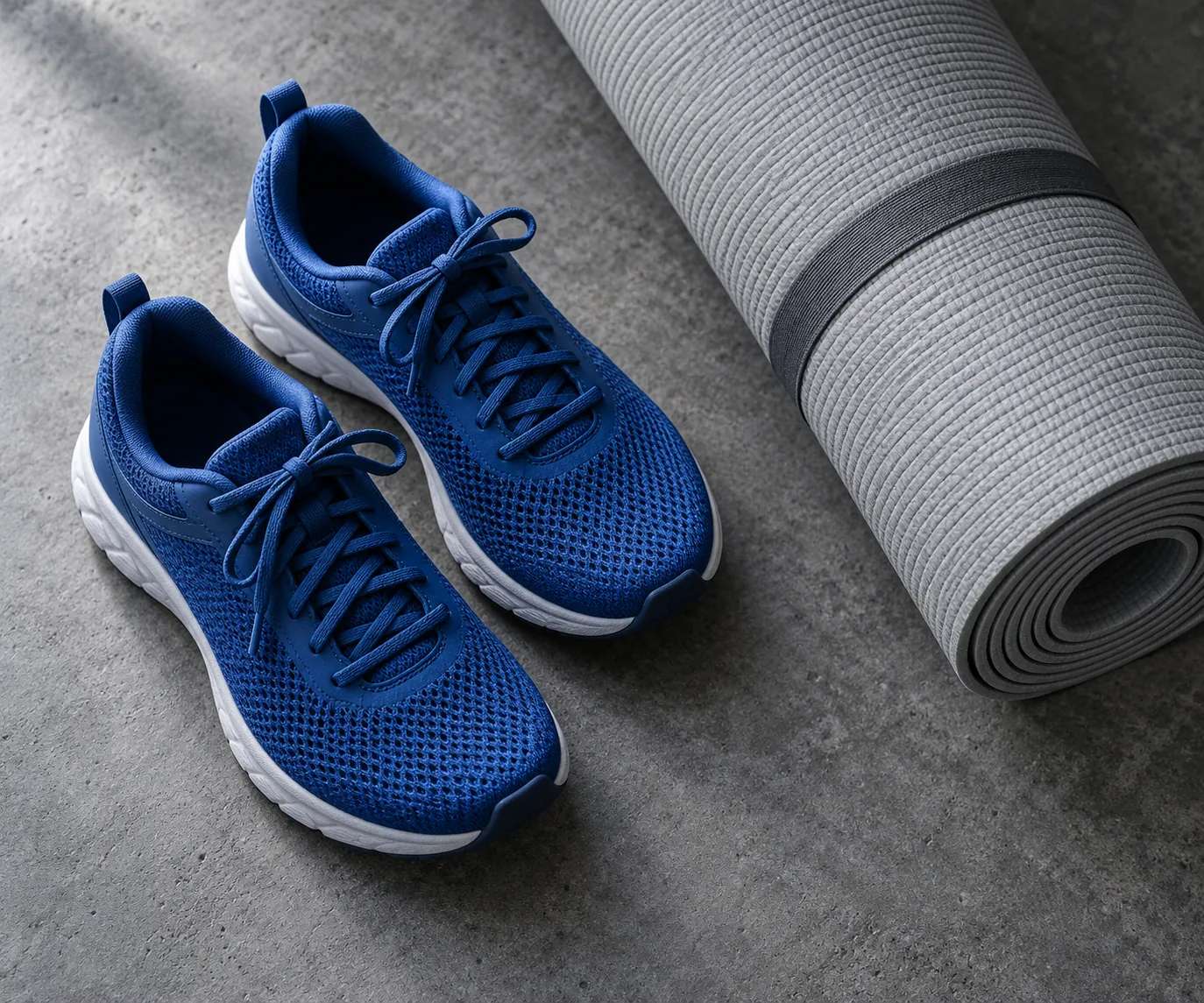
That distinction matters because sitting time and exercise time answer different questions. One asks how the rest of the day is spent. The other asks about activity. A gym membership is admirably portable, but it does not turn an office chair into exercise equipment.
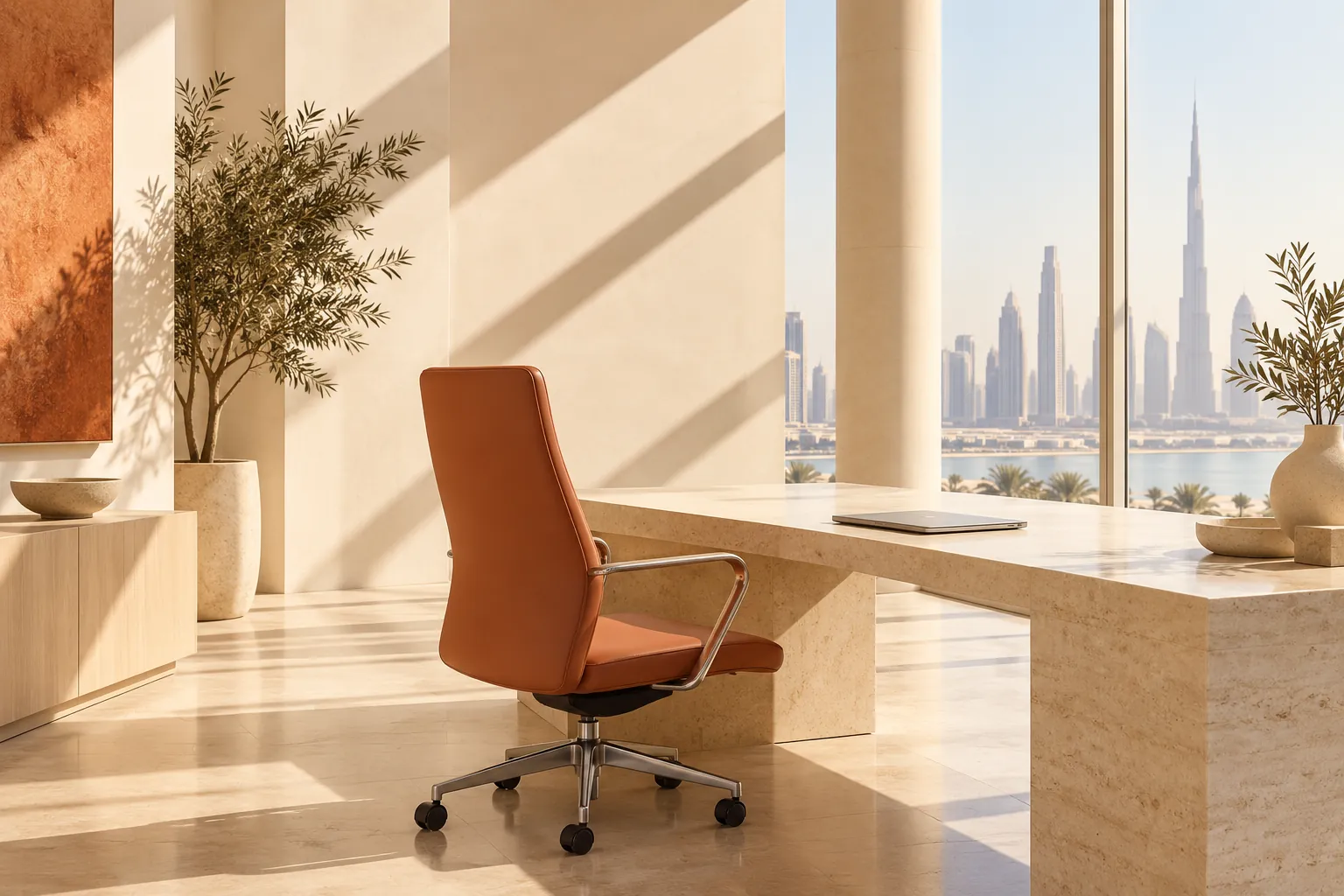
For a hypothetical Dubai desk worker, the useful picture is the sequence: a seated commute, desk tasks, meetings and evening screen time. This is an illustration of where sitting can accumulate, not a measured description of the average UAE resident.

Can you exercise and still sit a lot?
Yes, exercise and substantial sedentary time can coexist because they describe different parts of the day. Dubai Health Authority's recommendations for adults aged 18 to 64 separately address limiting sedentary behaviour and doing aerobic and muscle-strengthening activity.
The guideline describes 150 to 300 minutes of moderate-intensity aerobic activity, or 75 to 150 minutes of vigorous activity, or an equivalent combination across the week. It also includes muscle-strengthening activity on two or more days. Those are population recommendations in the adult activity section, not a personalised exercise prescription.
The practical interpretation is to ask two questions rather than force everything into one score: what activity happens across the week, and how much of the remaining waking day is sedentary? Neither a training diary nor a chair-time estimate is a complete health assessment.
!Blue walking shoes beside a rolled grey exercise mat

What does UAE research actually show?
A UAE university study found substantial sedentary time in its participants, not a national sitting-time average. Published in BMJ Open Sport & Exercise Medicine in 2021, the cross-sectional study recruited 140 university students and used accelerometers to measure activity. Participants spent approximately 80% of waking time in sedentary behaviour.
That finding is locally relevant, but its boundaries matter. A student sample cannot represent every occupation, age group or emirate. A cross-sectional design also cannot establish that a person's sitting caused a particular health outcome. The research paper's methods and discussion provide the context that a dramatic percentage alone leaves out.

For UAE and GCC readers, the sensible takeaway is a better question about daily routines, not a diagnosis by geography. Turning a study into a verdict on everyone with an office access card would be efficient. It would not be careful.
!Empty car passenger seat overlooking a Gulf city skyline

How often should desk workers take movement breaks?
The sedentary-behaviour recommendation for adults in Dubai Health Authority's guideline does not specify a universal break interval. Instead, section 9.1 recommends limiting sedentary time and replacing it with activity of any intensity, including light activity. That is not the same as declaring one timer setting medically correct for everyone.
Its workplace recommendations include walk-and-talk meetings, support for behavioural change, facilities for activity and workplace policies that create opportunities to move. The emphasis extends beyond individual willpower to how work is organised.
For a Gulf employer, an editorial interpretation is to examine whether an accessible indoor route, an optional moving meeting or genuine time between appointments is feasible. These are workplace-design questions, not promises of a measurable health outcome. An optional arrangement also leaves room for different mobility needs and job requirements.
!Plant-lined indoor corridor with a clear accessible pathway

A calendar packed solid from morning to evening is not improved merely by adding a cheerful reminder. The reminder still needs somewhere to go.
Can a wellness test measure the effects of sitting?
The mescreen™ UAE product page does not establish that its assessment can isolate the effects of sitting or certify that an office routine is healthy. Its current product description describes an at-home mitochondrial function assessment using a dried blood spot sample and laboratory analysis. It presents the report as wellbeing and performance tracking, not diagnosis.
Neither the Dubai activity guideline nor the UAE student study cited here evaluates mescreen™. They therefore cannot support a claim that this product measures sitting-related harm, identifies a cause of symptoms or proves that a movement change has worked.
For separate background reading, the site's introduction to mitochondrial function covers the broader topic. It is not the evidence base for this article's activity guidance.
If you are considering wellness profiling, read the current UAE product scope and non-diagnostic limitations before deciding whether the service matches your question. Testing and understanding an everyday routine are not interchangeable tasks.
!Blank notebook and ceramic cup on a plum table in warm evening light

Limitations
This article explains guidance and research, not an individual's health status. The UAE study is cross-sectional and limited to university students; it cannot supply a representative UAE or GCC office-worker average or prove cause and effect.
Dubai Health Authority's adult recommendations are population guidance, not a tailored programme. Its special considerations call for healthcare-professional consultation before activity for adults with chronic conditions and for pregnant or postpartum women. This article cannot determine which activity is suitable for a particular reader.
No evidence cited here establishes that mescreen™ improves health outcomes or measures the individual consequences of sitting. Health concerns belong in a conversation with a licensed healthcare professional, not an interpretation of this article or a wellness report alone.