
What Is Mitochondrial Function? A Complete Overview
Reviewed & Edited by: Dr. Dooa Arif, Content Strategist
Estimated Reading Time: 8 minutes
Table of Contents
TL;DR
Mitochondria are essential for cellular function, providing the energy needed for nearly every process in the body. Their role extends beyond energy production to include calcium signaling, heat generation, and cellular maintenance. As the "powerhouses" of cells, they are critical for sustaining health and vitality, but their function can decline over time, contributing to ageing and various health issues. Supporting mitochondrial health through exercise, proper nutrition, quality sleep, and stress management can significantly enhance overall well-being and potentially slow the aging process.
When people ask what is mitochondrial function, they’re essentially questioning how our bodies create the energy needed for every breath, heartbeat, and thought. These microscopic structures exist within nearly every cell in your body, working tirelessly to convert the food you eat into usable cellular energy. The function of mitochondrial activity extends far beyond simple energy production, influencing everything from cellular communication to the ageing process itself.
Think of mitochondria as tiny power stations scattered throughout your cells. Just as a city requires numerous power plants to keep the lights on, your cells need multiple mitochondria to maintain their operations. Some cells, particularly those in energy-intensive tissues like your heart and brain, contain thousands of these powerhouses, whilst cells with lower energy demands might contain just a few hundred.
What makes mitochondria truly fascinating is their evolutionary origin. Scientists believe these organelles were once independent bacteria that formed a symbiotic relationship with our ancestral cells billions of years ago. This ancient partnership gave rise to complex life as we know it, and mitochondria still retain their own DNA, separate from the genetic material in your cell nucleus.
The Energy Production Process
The phrase “mitochondria is the powerhouse of the cell” has become almost legendary in human health education, and for good reason. This description captures the essence of what is the function of mitochondria in a cell: converting nutrients into adenosine triphosphate (ATP), the universal energy currency your body uses for virtually every activity.
This remarkable conversion process occurs through cellular respiration, a series of intricate biochemical reactions that extract energy from glucose and oxygen. When you eat a meal, your digestive system breaks down food into simple sugars, fats, and proteins. These molecules eventually make their way into your cells, where mitochondria perform their magic, transforming these nutrients into ATP molecules that power everything from muscle contractions to neurotransmitter production.
The efficiency of this process is extraordinary. A single glucose molecule passing through mitochondrial respiration can generate up to thirty-eight ATP molecules, providing sustained energy for cellular activities. However, this process also produces reactive oxygen species as by-products, which is why mitochondrial health connects closely to oxidative stress and cellular ageing.
Your mitochondria work around the clock, producing approximately your body weight in ATP every single day. This staggering output demonstrates why maintaining healthy mitochondrial function is absolutely crucial for sustained energy levels, mental clarity, and overall vitality.
Key Takeaways: Mitochondria are the powerhouse of the cell because they transform nutrients and oxygen into ATP through cellular respiration.

Mitochondrial Structure and Design
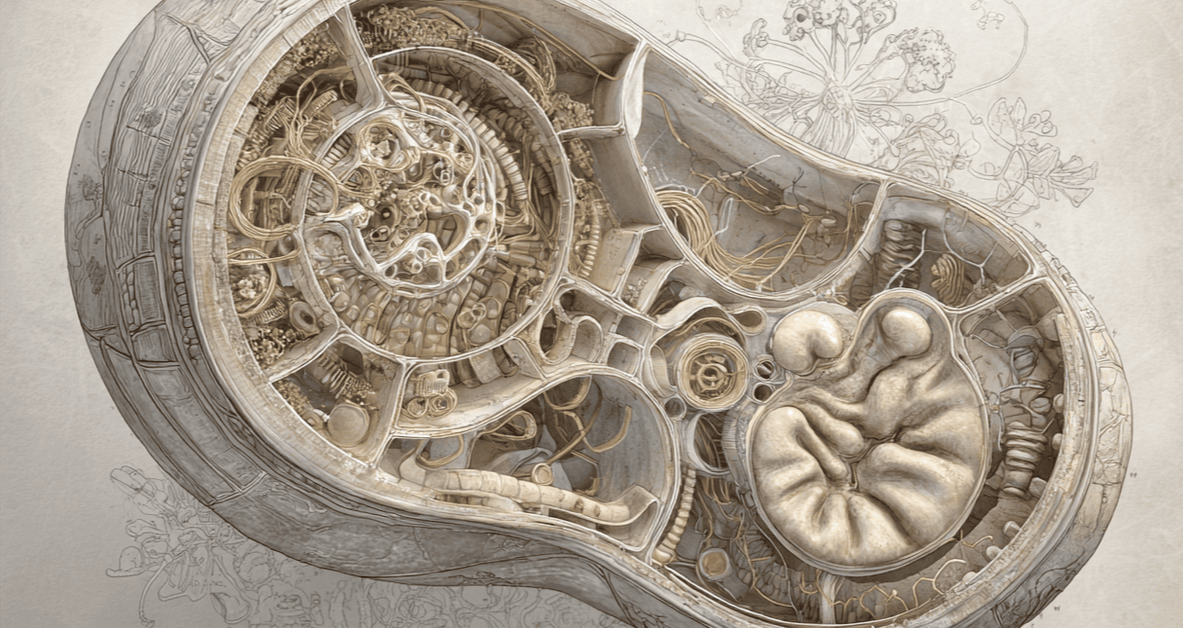
Understanding mitochondria function structure and function of mitochondria animal cell reveals why these organelles are so effective at energy production. Each mitochondrion features a distinctive double-membrane design, with an outer membrane that acts as a protective barrier and an inner membrane folded into elaborate structures called cristae.
These cristae folds dramatically increase the surface area available for energy production, much like how the villi in your intestines maximise nutrient absorption. The space enclosed by the inner membrane, called the mitochondrial matrix, contains enzymes and genetic material essential for the energy creation process.
The mitochondria function in animal cell biology extends to various specialised structures:
- Outer membrane: Provides a protective boundary whilst allowing small molecules to pass freely through protein channels
- Inner membrane: Houses the protein complexes responsible for the final stages of ATP production
- Cristae: Folded structures that maximise surface area for efficient energy generation
- Matrix: Contains enzymes, ribosomes, and mitochondrial DNA necessary for independent protein synthesis
- Intermembrane space: Creates the electrochemical gradient essential for ATP production
This sophisticated architecture enables mitochondria to perform their energy-generating role with remarkable efficiency whilst maintaining the flexibility to adapt to changing cellular demands.
Key Takeaways: A specialised architecture allows mitochondria to generate ATP efficiently whilst maintaining their own genetic material and protein synthesis machinery.
Functions Beyond Energy Creation
Whilst energy production remains their primary role, mitochondrial function encompasses far more than ATP generation. These versatile organelles participate in numerous cellular processes that influence your overall health and wellbeing in surprising ways.
Mitochondria play crucial roles in calcium signalling, helping cells communicate with each other and coordinate complex activities. They’re involved in producing important molecules called heme groups, essential components of haemoglobin that carries oxygen in your blood. Additionally, mitochondria participate in cellular quality control, helping identify and remove damaged cellular components through processes that maintain cellular health.
Perhaps most intriguingly, mitochondria influence the ageing process itself. As these powerhouses work tirelessly throughout your life, they gradually accumulate damage that can affect their efficiency. This mitochondrial decline contributes to many age-related changes, from decreased energy levels to increased susceptibility to various health challenges.
If you’re looking to assess your current mitochondrial function and gain insights into your mitochondrial efficiency and what you can do to optimize it, opt for the mescreen™ Mitochondrial Function Assessment.
Your mitochondria also help regulate body temperature through a process called thermogenesis, particularly important in brown fat tissue. They participate in immune responses, help synthesise certain hormones, and even play roles in determining cell fate during development and tissue repair.
Key Takeaways: Mitochondrial functions extend beyond energy production to include calcium signalling, molecule synthesis, quality control, and temperature regulation.
FAQs
You can improve mitochondrial function through regular exercise, a nutrient-rich diet, quality sleep, stress management, and targeted supplements like CoQ10 and antioxidants.
Symptoms of mitochondrial dysfunction in adults can include fatigue, muscle weakness, neurological issues, difficulty with coordination, and organ dysfunction.